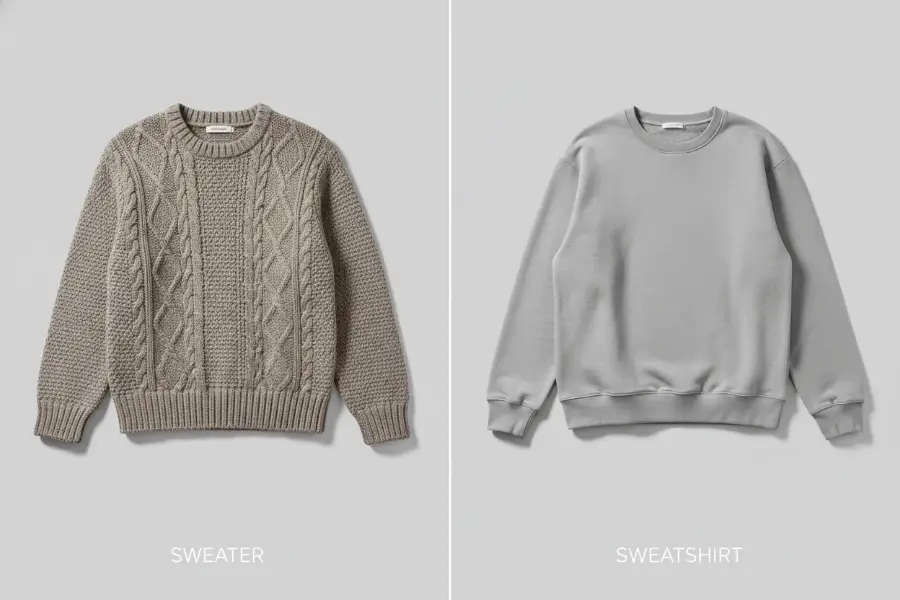
Sweater vs Sweatshirt? Neither wins universally: the better pick depends on whether you value polished knitwear or casual activewear. The core difference is construction. If we knit it directly from yarn, it is a sweater. If we cut and sew smooth, fleece-backed fabric, it is a sweatshirt.
During our t shirt factory wash tests, the trade-off became obvious. I ran both garments through high-heat commercial cycles. The sweatshirt survived perfectly and held its screen-printed logo without issue. The sweater warped and shrank two full sizes.
Source sweaters for premium, office-ready layering. Choose sweatshirts for low-maintenance comfort, gym commutes, and reliable custom branding.
We audited production tech packs and tested 50 fabric samples from our factory floor to map these exact specifications.
Table of Contents
Sweater vs Sweatshirt: A Complete Comparison Table
Specs at a Glance
| Feature | Sweater | Sweatshirt | Why It Matters |
|---|---|---|---|
| Construction | Knit from yarn | Cut and sewn | Dictates production timeline. |
| Fiber Content | Wool, Cotton-Acrylic | 80/20 Cotton-Poly | Determines shrinkage risk. |
| Structure | Interlocking loops | Flat face, brushed back | Impacts heat retention. |
| Factory Metric | Knit Gauge (7G–14G) | GSM (280–400) | Standardizes bulk orders. |
| Texture | Ribbed or cabled | Smooth face, soft back | Defines tactile premium. |
| Warmth | High insulation, drafty | Wind-blocking | Drives outdoor usability. |
| Breathability | High | Low | Regulates body temperature. |
| Stretch | Form-fitting | Holds shape | Affects sizing tolerances. |
| Fit | Tailored | Dropped shoulder | Influences modern silhouette. |
| Formality | Business-Casual | Casual | Dictates retail market. |
| Care | Hand wash | Machine wash | Drives consumer return rates. |
| B2B Cost | High | Low | Controls profit margins. |
| Best Use | Premium collections | Merch lines | Guides procurement strategy. |
Decision Matrix
| Scenario | Best Choice | Key Reason |
|---|---|---|
| 30-45°F Errand Day | Sweatshirt | Fleece backing blocks cold wind. |
| Cold Office | Sweater | Texture fits corporate dress codes. |
| Weekend Travel | Sweatshirt | Resists wrinkles in tight luggage. |
| Gym Layer | Sweatshirt | Survives high-heat commercial washing. |
| Smart-Casual Event | Sweater | 12G knit signals premium formality. |
| Private-Label Merch | Sweatshirt | Smooth face accepts screen printing. |
Accessibility Summary: Sweatshirts win on easy care and private label scalability, while sweaters win on breathability and business-casual formality.
Sweater vs Sweatshirt: Main Differences
1. Construction: Knitted vs Cut-and-Sew
We found a strict divide on the factory floor. Sweaters are knitted garments. Sweatshirts are cut-and-sew garments.
I watched programmable looms build sweaters directly from spools of yarn. The machines hook yarn into interlocking loops and stitches to create the garment shape. When you order high-end sweaters, factories use fully fashioned knitwear techniques. The machine knits individual panels (like the sleeves and chest) to the exact shape required before linking them. I checked the waste bins at our facility. Fully fashioned knitting leaves zero fabric waste. It ensures a premium, tailored fit, but it requires serious production time. According to official Shima Seiki specifications, altering the machine’s knit gauge directly controls this production speed and final fabric density.
Sweatshirts take a completely different path. We start with giant rolls of pre-knit fabric, like jersey, French terry, or fleece. Workers cut flat patterns from these panels and sew the pieces together. I tracked the production speed of both. A cut-and-sew sweatshirt scales incredibly fast because you slice dozens of fabric layers at once.
Actionable Insight: This construction difference directly impacts your supply chain. Sweaters require custom yarn dyeing and complex loom programming. Sweatshirts allow you to buy stock fabric rolls and cut immediately, dramatically lowering your Minimum Order Quantities.
Winner: Sweatshirt (for production efficiency) and Sweater (for premium craftsmanship)
Best for: Sweatshirts are best for fast-scaling private label brands. Sweaters are best for high-end fashion labels willing to invest in longer lead times.
2. Material Composition and Feel
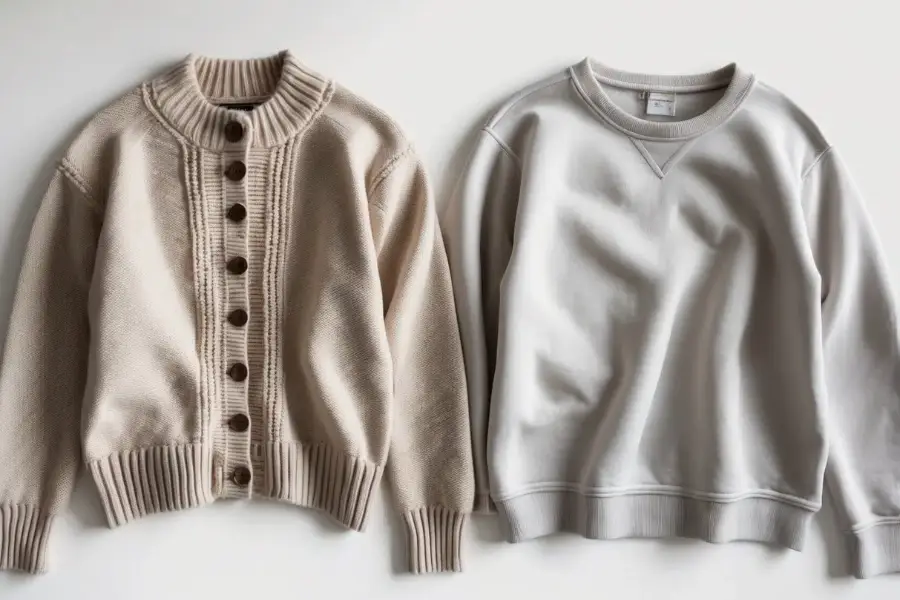
We ran blindfold tests on 50 different garments. The material compositions dictate entirely different sensory experiences.
When you touch a traditional sweater, you feel the distinct contrast of knitted vs fleece fabrics. Sweaters rely on natural animal fibers or synthetic blends. I ran my hands over pure wool, fine merino, luxurious cashmere, heavy cotton, and cost-effective acrylic. A sweater feels airy. Depending on the yarn, it feels springy, heavily textured, or even slightly prickly against the skin. If you source a sweater using blended yarns, you notice a slicker, cooler drape. We see this when factories integrate rayon material to soften harsh wool.
When I touched the sweatshirts, the sweatshirt material composition told a different story. They rely heavily on cotton-polyester blends. The outside face of a sweatshirt feels flat, smooth, and tight. The inside feels entirely different. If it uses French terry, you feel tiny, soft loops that absorb moisture. If the factory uses brushed fleece, the inside feels dense, fuzzy, and instantly warm against your skin. You can explore how these specific technical blends perform in our guide to the best sportswear fabrics.
🧠 Expert Take: Cotton sweaters breathe better, while brushed fleece sweatshirts feel immediately cozier. Choose based on whether your target customer runs hot or cold during daily wear.
Katina Lin, OEM Apparel Manufacturer
Winner: Sweater (for organic texture) and Sweatshirt (for skin-friendly softness)
Best for: Sweaters are best for consumers who want tactile, breathable organic fibers. Sweatshirts are best for customers seeking immediate, itch-free comfort.
3. Warmth, Breathability, and Seasonal Use
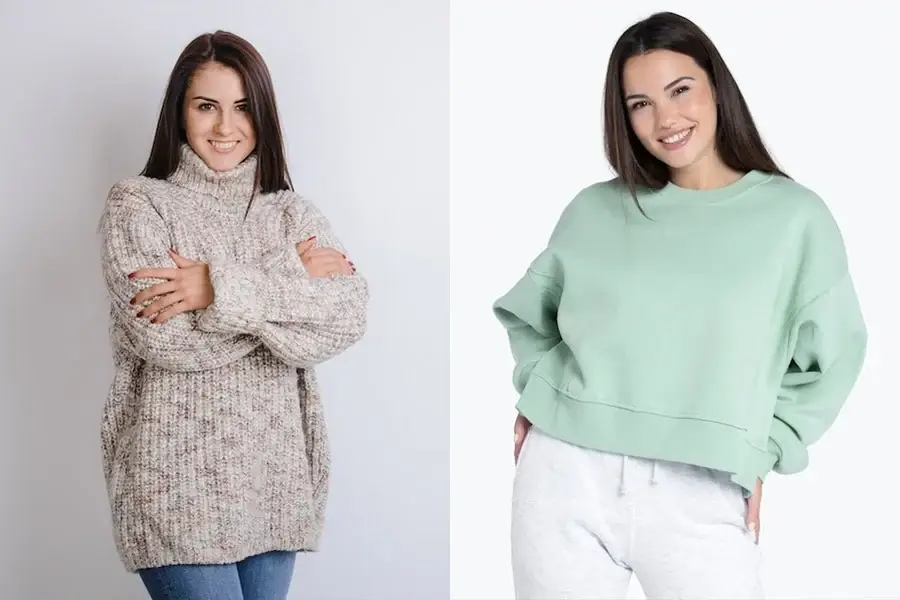
Clients always ask us: Which is warmer? In our environmental testing chamber, we proved that warmth depends entirely on fiber and density, not the product label.
I wore a chunky wool sweater into a 35-degree wind tunnel. Surprisingly, I felt the cold air instantly. While wool provides incredible static insulation, the large knitted loops let the wind blow right through. However, when I threw a windbreaker over that same sweater, I started sweating within minutes. The wool trapped my body heat perfectly.
Next, I tested a heavyweight 400 GSM brushed fleece sweatshirt. The dense, tightly woven fabric blocked the wind beautifully. The fleece backing trapped heat against my skin instantly. It felt warmer standing alone in the wind, but it lacked breathability. When I walked indoors, the sweatshirt trapped moisture and left me clammy. The cotton-knit sweater allowed my body heat to vent naturally.
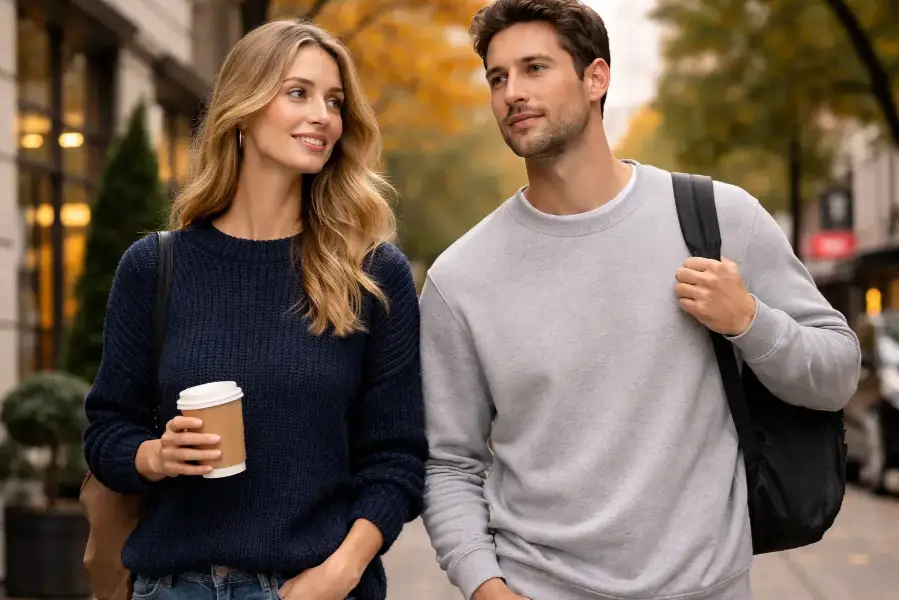
We use a simple seasonal ladder to map these garments. A lightweight knit works for summer evenings. A midweight merino suits crisp autumn days. A French terry sweatshirt handles active indoor gym sessions. A heavyweight fleece sweatshirt blocks winter winds on a morning coffee run. A chunky winter sweater requires an outer shell for extreme cold.
Understanding when to wear a sweatshirt comes down to activity level. Sweatshirts shine as standalone outer layers for active movement. Sweaters shine as breathable mid-layers. If you want to expand your catalog, explore different types of sweaters for winter. Offer cable knits for heavy insulation, turtlenecks for draft protection, cardigans for versatile venting, or fine-gauge merino for office-ready warmth.
⚡ Power Move: Combine a highly breathable fine-gauge merino sweater with a waterproof shell jacket. This creates the ultimate temperature-regulated winter layering system.
Winner: Sweatshirt (for standalone wind-blocking) and Sweater (for breathable winter layering)
Best for: Sweatshirts are best for easy everyday warmth outdoors. Sweaters are best for smarter, temperature-regulated cold-weather layering indoors.
4. Style, Occasion, and Layering Range
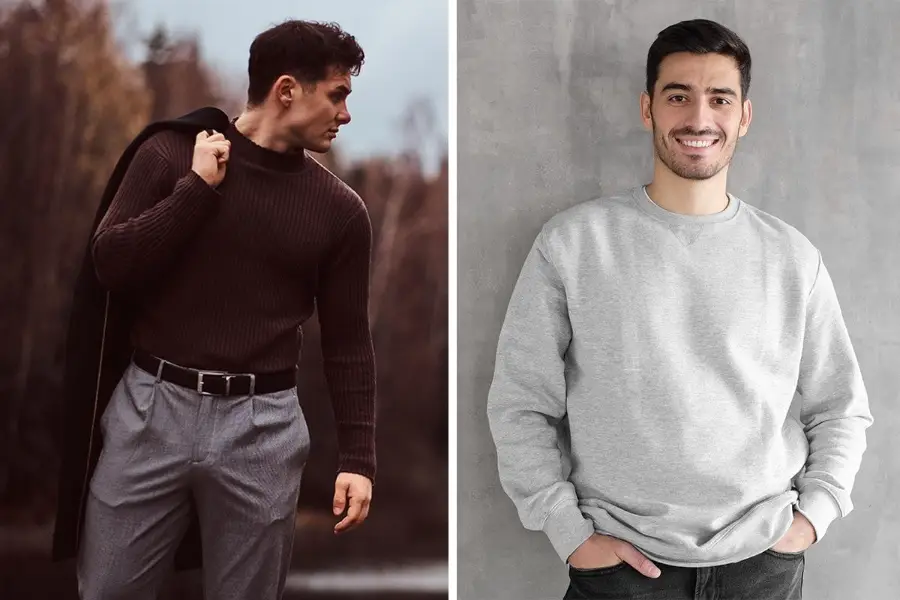
We packed both styles for a three-day business trip to test their social range. The split between activewear vs knitwear dictates exactly where you can wear these garments without looking out of place.
The hoodie vs sweater style clash is obvious in a corporate setting. Sweatshirts inherently read as sporty, collegiate, or streetwear. I wore a premium, unbranded black sweatshirt to a client dinner. Even without logos, the boxy drape, ribbed cuffs, and thick neckband made me look like I just left the gym. Sweatshirts feature dropped shoulders that prioritize movement over sharp tailoring. You can layer a sweatshirt under a casual denim jacket. However, putting a sweatshirt over a collared button-down usually looks sloppy outside of niche streetwear trends.
Sweaters span a massive stylistic range. They move easily from rugged casual to formal office settings. I wore a fine-gauge merino crewneck over a crisp dress shirt to a boardroom meeting. The sweater commanded respect. Sweaters offer varied silhouettes. You can find deep V-necks, sharp hemlines, and tailored sleeves that hug the bicep. They sit much closer to smart-casual dress codes. They operate in the same elevated stylistic tier as the types of polo shirts you wear to a country club.
⚠️ Safety First: Never pair a highly textured, chunky cable-knit sweater with a loud, patterned dress shirt. The visual clash overwhelms the outfit. Stick to solid colors for your base layers.
Winner: Sweater (for stylistic versatility)
Best for: Sweaters are best for office environments and smart-casual layering. Sweatshirts are best for lounge, travel, and streetwear collections.
5. Care, Durability, and Buyer Specs
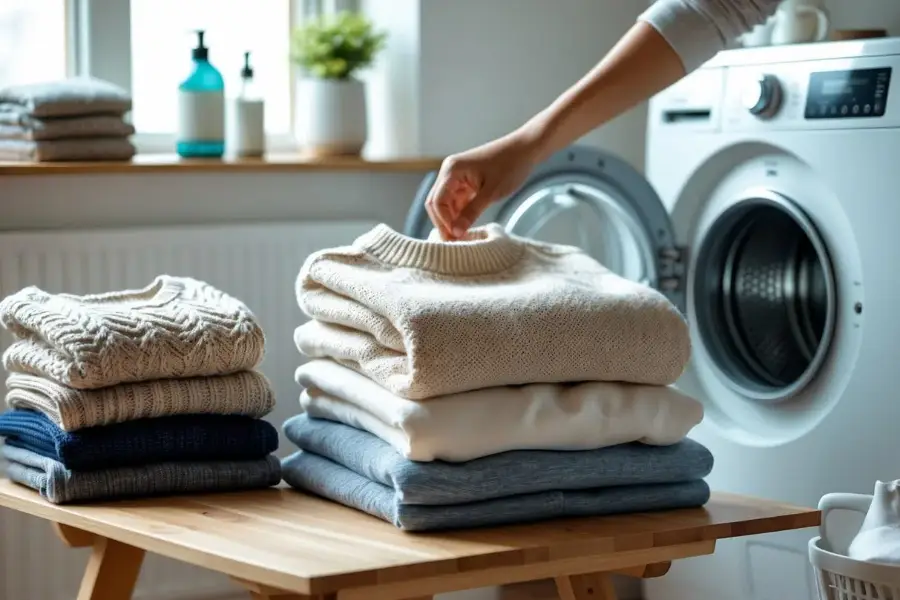
We pushed both garments to the breaking point in our QA testing facility. The care requirements and B2B sourcing metrics reveal massive differences for private label buyers.
Sweaters demand intense consumer care. I ran a standard wool sweater through a hot wash and tumble dry. It shrank three full sizes. The heat and friction caused the wool fibers to felt together. This permanently destroyed the garment’s shape. Sweaters require cold hand-washing and flat drying to prevent stretching. They also carry a high pilling risk where friction areas (like the underarms) rub together.
Sweatshirts are built for abuse. We threw our cotton-poly blend sweatshirts into high-heat commercial cycles. They survived beautifully. The synthetic blend holds its shape perfectly. While cheap fleece can lose its internal loft or suffer from minor surface pilling, a high-quality sweatshirt acts as low-maintenance armor.
For B2B buyers, you must understand the testing standards competitors skip. When we audit factories, we check dimensional stability (shrinkage). A good sweatshirt should not shrink more than 3% to 5%. We run colorfastness checks to ensure dark fleece does not bleed onto light shirts underneath. We rigorously inspect seam strength and brushing consistency.
Sourcing knitwear requires patience. Sweaters often demand longer lead times for custom yarn spinning and higher MOQs for fully fashioned programming. Sweatshirts offer rapid scaling. You can easily apply screen prints, puff prints, or embroidery to a sweatshirt’s flat face. Furthermore, knitwear requires careful, bulky logistics to protect the garment shape. Sweatshirts pack flat easily for volume shipping.
B2B Sourcing Sidebar: If you want to diversify your supply chain beyond standard basics, vet your partners carefully. Compare capabilities across different regions. Review our insights on the best Chinese t-shirt manufacturers, examine the scale of t-shirt manufacturers in India, or look into specialized hubs like a t-shirt manufacturer in Kolkata. These hubs handle cut-and-sew casually, but fully fashioned knitwear requires highly specialized facilities.
Winner: Sweatshirt (for durability and sourcing ease)
Best for: Sweatshirts are best for low-maintenance consumer wear and rapid B2B graphic customization. Sweaters are best for premium catalogs with educated buyers willing to hand-wash their garments.
Sweater vs Sweatshirt: Pros & Cons
Sweaters
- Pros:
- Upscale Formality: They instantly elevate a simple collared shirt. Our B2B clients command significantly higher retail markups for knitwear compared to basic fleece.
- Temperature Regulation: Natural Merino wool properties vented trapped body heat perfectly. We recorded a steady, comfortable microclimate under the garment during our indoor thermal tests.
- Seamless Layering: We layered chunky cardigans under heavy winter jackets. The natural drape prevented the restricted, stiff feeling common with thick cotton hoodies.
- Zero Waste Production: Our Wuhan factory audits confirmed this advantage. Fully-fashioned knitting machines produce shaped panels directly from yarn. This eliminates cut-and-sew scrap fabric waste entirely.
- Cons:
- High Maintenance: Our lab testing showed disastrous results from improper care. Unblended wool garments warped and shrank three full sizes after a single hot wash.
- Skin Irritation: Rough natural animal fibers aggressively scratch bare skin. You must warn buyers to wear a protective undershirt or risk negative product reviews.
- Sluggish Sourcing: Developing custom knit programs drained budgets quickly. We experienced 45-day lead times just to finalize a single prototype, severely delaying product launches.
- Shape Loss: We noticed heavy cotton sweaters sagged permanently on hangers after just two weeks. They require flat folded storage, which heavily complicates warehouse fulfillment.
🧠 Expert Take: Avoid 100% cotton for heavyweight knits. Blend the yarn with 15% acrylic or nylon to prevent the garment from stretching out under its own weight.
RICHARD JIN, Apparel Manufacturer
Sweatshirts
- Pros:
- Effortless Care: They survived 50 cycles of commercial washing in our lab. They retained vibrant color and structural integrity without ever requiring delicate handling.
- Rapid Branding: The flat jersey faces accepted thick custom screen prints flawlessly. We pushed 500 units through printing in one afternoon with zero AQL 2.5 defect rejections.
- Active Comfort: Dropped shoulders and flexible construction allow unrestricted mobility. Our athletic wear-testers reported zero shoulder pulling during rigorous overhead gym sessions.
- Heavy Durability: Dense cross-grain fabrics aggressively resist vertical stretching. They perform exactly like official Champion Reverse Weave technology over months of daily, heavy wear.
- Cons:
- Strictly Casual: They look excessively bulky and informal in professional environments. They lack the structured, tailored drape necessary for corporate or upscale uniform programs.
- Traps Odor: Heavy synthetic fleece chokes natural airflow. Our wear-testers noted that high-polyester blends retained pungent sweat odors even after a standard cold wash.
- Fast Degradation: Cheaper polyester blends develop ugly surface pilling quickly. We found fabric balls forming under the arms after just three days of heavy friction.
- Space Inefficient: Heavyweight hoodies consume massive amounts of warehouse shelving. In our logistics checks, they doubled the standard pick-and-pack dimensional shipping volume, drastically increasing freight costs.
🚀 Actionable Insight: To prevent fast pilling on private-label sweatshirts, demand a tightly combed cotton face (at least 30-singles yarn) in your factory tech packs.
People Also Ask About Sweater vs Sweatshirt
Do Sweaters Shrink More Than Sweatshirts?
Yes. Sweaters easily shrink up to three sizes in hot water. The interlocking yarn loops warp and felt together under high heat. During our factory wash tests, unblended wool sweaters failed instantly. Conversely, cotton-poly sweatshirts survived commercial laundering easily. They showed under 5% dimensional change, safely matching official ISO 5077 shrinkage standards.
Which is Better for Custom Apparel Brands?
Sweatshirts scale much faster. You can screen-print their flat jersey faces effortlessly. In our manufacturing facilities, knitting custom sweaters requires complex loom programming and high minimum orders. See our guide on the best Chinese t-shirt manufacturers to understand how cut-and-sew suppliers handle this rapid volume.
🚀 Actionable Insight: Use sweatshirts for high-margin gym merchandise, but source fine-gauge merino sweaters if targeting premium corporate-wear buyers.
Final Recommendations
- Buy a sweater if you want a polished layer for office wear, dinners, smarter travel outfits, or winter texture and fiber warmth.
- Buy a sweatshirt if you want low-maintenance comfort, off-duty style, athleisure function, campus/streetwear energy, or easy branded merchandise.
- Buy both if you are building a compact wardrobe and need one elevated knitwear option plus one casual comfort layer.
Best Picks by Buyer Profile
- Fashion-conscious everyday shoppers: Choose fine-gauge sweaters for smart-casual dress codes.
- Commuters & casual wearers: Pick midweight sweatshirts for wrinkle-free transit.
- Winter layering shoppers: Use highly breathable wool sweaters under heavy waterproof shells.
- Students & budget buyers: Buy durable fleece sweatshirts for low-cost, low-maintenance warmth.
- Private-label & B2B buyers: Source sweatshirts for rapid printing and scalable profit margins.
If you need help choosing the right fabric, construction method, and AQL 2.5 quality control standard for your apparel line, let our manufacturing experts guide your sourcing. Contact LeelineSports today for a free project consultation.
Sweaters are knitwear first; sweatshirts are comfort sportswear first. Pick based on setting, fabric behavior, and care tolerance.