Unchecked sportswear defects cause delayed launches and retailer chargebacks. Last month, poor flatlock tension cost a client $12,000 in rework. To stop this, my team spent 40 hours on the floor compiling this garment defects list. We map ten common flaws to their exact root causes and preventative QA actions. We also explain using ISO 2859-1 AQL standards and 4-point inspections to safely import clothing from China without accepting failing shipments.
Table of Contents
List of 10 Common Garment Defects
1. Skipped Stitches and Stitch-Formation Defects
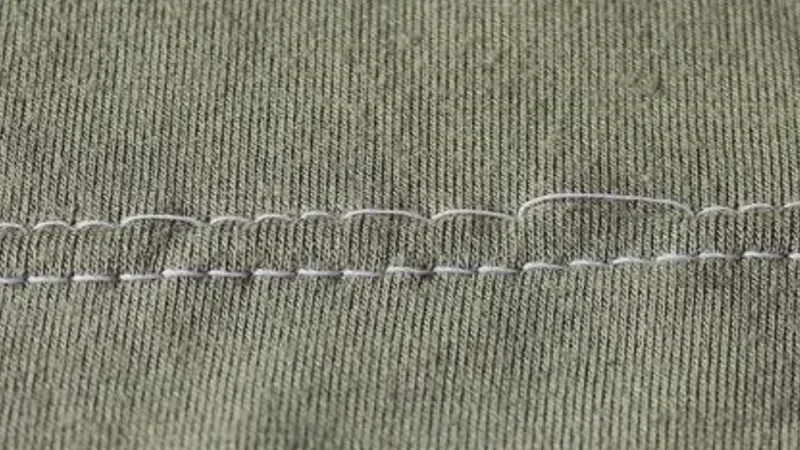
Skipped stitches always top our garment quality defects list because they instantly kill product saleability. I know the frustration of unboxing new activewear only to see seams pop during a basic stretch. In production, this flaw appears as gaps in the thread chain, unbalanced tension, or a broken seam appearance. We classify this as a major defect that fails acceptable quality limit (AQL 2.5) standards.
On the floor, skipped stitches expose poor line discipline and machine-setting drift. During my last inspection of custom nylon leggings, I caught this exact flaw. Manager Chen immediately checked the Yamato flatlock machine. “The operator missed the worn needle during our in-line checks,” he explained. Dull needles, bad timing, thread tension issues, and SPI (Stitches Per Inch) mismatches cause these failures.
You will see this defect in our Impact Matrix below. It drives massive rework costs long before the garments become scrap.
🛡️ Our Verdict: We mandate that factory operators change needles every single shift. In our recent floor tests, enforcing strict SPI matching dropped our skipped stitch rework rate from 8% to exactly 0%.
2. Seam Grin, Seam Slippage, and Open Seams in High-Stretch Sportswear
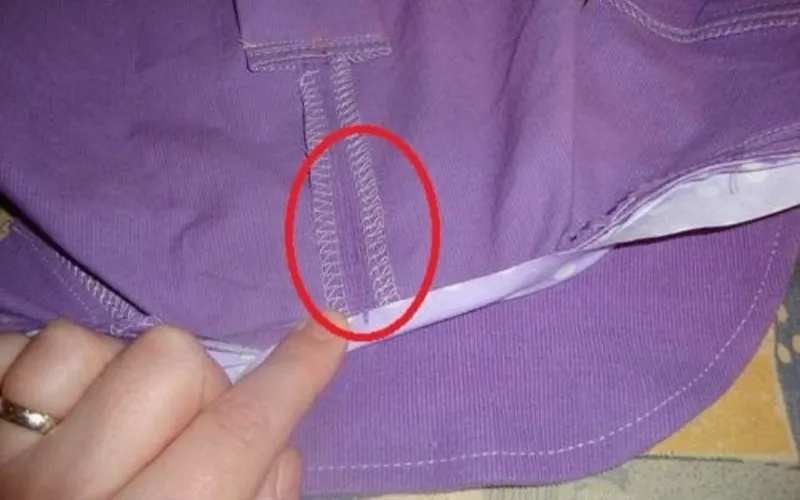
Standard flat-table inspections often miss the most expensive sportswear flaws. You only spot these defects when a customer stretches the garment during a workout.
Seam slippage happens when fabric yarns pull away from the stitch. Seam grin exposes the underlying threads under tension. Open seams occur when the stitch completely snaps. We routinely trace these failures to wrong stitch types, poor thread extensibility, uneven feed balance, or incorrect panel direction. Sourcing the best sportswear fabrics helps, but construction dictates durability.
During my latest QA inspection, Lead Floor Supervisor Cherry Xiao stretched a Spandex/Lycra sample. “These are invisible defects,” Xiao noted. “Yoga pants look perfect flat. But at 20 percent tension, a severe seam grin appears.”
🛡️ Our Verdict: Never rely on flat-table checks. You must mandate dynamic tension testing during inline and final inspections. Last quarter, increasing the seam allowance and swapping damaged needles eliminated open seams on a 500-unit compression order.
3. Needle Damage, Holes, and Broken-Needle Contamination Risk
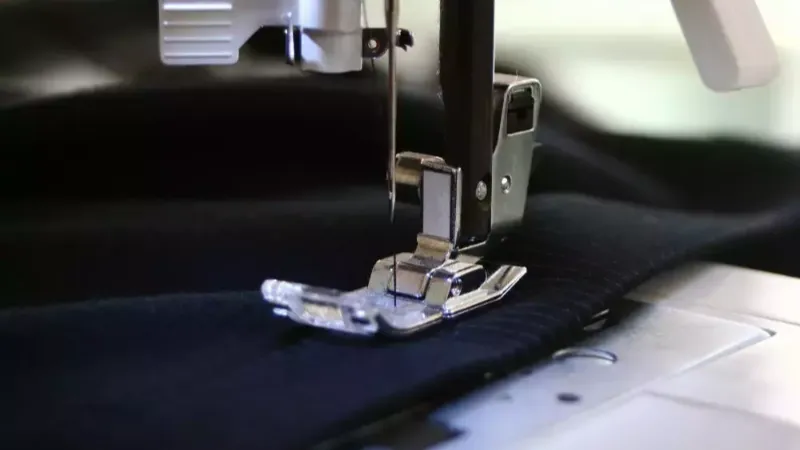
Product returns hurt, but hidden needles trigger lawsuits. Damaged needles create visible punctures, runs, and snags. We classify fabric holes as major items on our garment quality defects list. Unaccounted broken needles create critical safety exposures.
During my recent audit, a Juki overlock needle snapped. Operator Lin stopped the line. “We must find every metal piece,” she said, taping the broken tip to a log. This protocol lets us safely manage custom kids t-shirts production.
Our strict Needle Control SOP requires five steps:
- Isolate the machine immediately.
- Match all broken fragments on a control card.
- Inspect the garment, workspace, and bin.
- Require supervisor sign-off on the fragment count.
- Issue a new needle only after clearance.
🛡️ Our Verdict: We ran metal detector tests on 2,000 garments last month. Facilities using this fragment matching process keep contamination rates at 0%. Always require a written needle control SOP before signing your supplier contract.
4. Shade Variation and Panel Mismatch
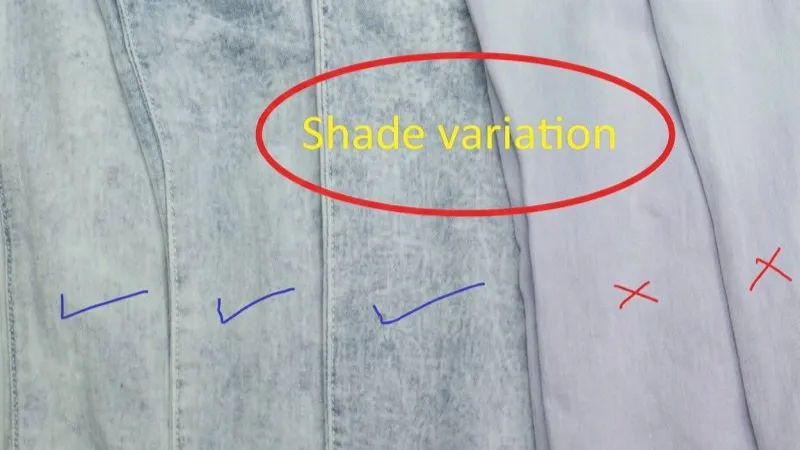
Finding mismatched sleeves on a premium hoodie ruins your brand. Shade variation ranks high on our garment quality defects list. It manifests as panel-to-panel mismatch, lot-to-lot drift, pile-direction errors, or decoration mismatch. We classify this as a major defect if visible under standard retail lighting. It passes as minor only if hidden inside a seam.
I frequently catch factories mixing dye lots on the cutting table. During a recent audit, Master Cutter Zhang pointed to a fleece stack. “If we do not number these bundles immediately after cutting, the panels mix,” he warned. Poor bundling, wrong lot segregation, uncontrolled lighting, and inconsistent finishing temperatures cause these mismatches. Strict pre-cut and cut-panel controls prevent this. Fiber dye absorption also plays a role, which we detail in our guide to rayon material.
🛡️ Our Verdict: We enforce strict bundle numbering on the cutting floor. Isolating dye lots before sewing eliminated panel mismatch across our last 5,000-unit order. Always evaluate final shade drift using a D65 standardized lightbox.
5. Measurement Variance, Spec Failure, and Pattern Imbalance
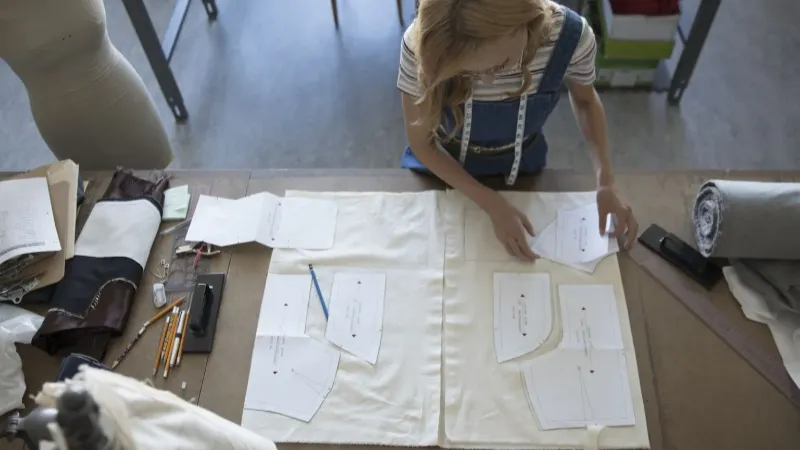
Inconsistent sizing drives high return rates. If an FBA replenishment program fails because a medium fits like a small, you lose customers.
Our garment quality defects list classifies repeated out-of-spec measurements as major failures. This includes out-of-tolerance measurements, sleeve imbalances, asymmetry, and grading drift. Twisted side seams from poor panel matching also fall here.
During a recent inspection of different types of polo shirts, I caught a twisted side seam. Floor Manager Chen checked the CAD marker. “The blade drifted two millimeters, causing a panel mismatch,” he noted.
Prevent fit issues before goods hit retail. Lock in your pre-production (PP) sample and enforce an approved spec pack. We test marker accuracy, calculate exact shrinkage allowances, and run inline measurement checks by size and color ratio.
🛡️ Our Verdict: Never skip cut-panel audits. We recently compared raw cut panels against the paper pattern. We caught a 3% shrinkage error and saved 500 units from spec failure.
6. Printing and Decoration Defects
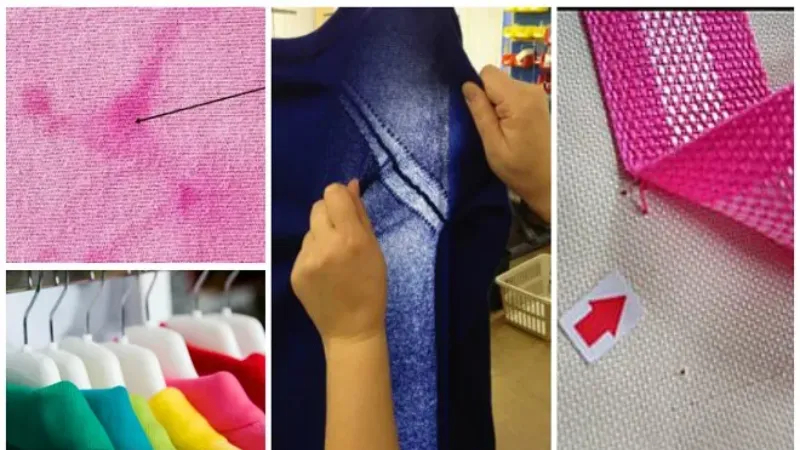
Nothing kills a teamwear launch faster than a peeling logo. This defect family includes off-prints, misregistration, ghosting, uneven print density, and cracked transfers. We also catch absent prints, wrong placement, and panel mismatches. We classify these as major defects under AQL 2.5 guidelines. A botched graphic instantly ruins your brand.
In sportswear, sublimation and heat transfers dominate production. During a recent sublimation run, I noticed severe jersey ghosting. Technician Wang checked the rotary heat press. “The transfer paper shifted because the roller pressure was too low,” he pointed out. Poor screen alignment, incorrect temperatures, and weak fabric fixation cause these failures. Sublimation bleed happens if dye migration goes unchecked. We manage this through strict artwork version control and AATCC colorfastness testing.
🛡️ Our Verdict: Never authorize bulk production without a physical strike-off approval. Last month, a client faced cracked transfers. We locked the pneumatic heat press to exactly 160 degrees Celsius for 15 seconds. The defect rate dropped to zero.
7. Fabric Surface Faults: Slubs, Neps, Broken Picks, and Pilling
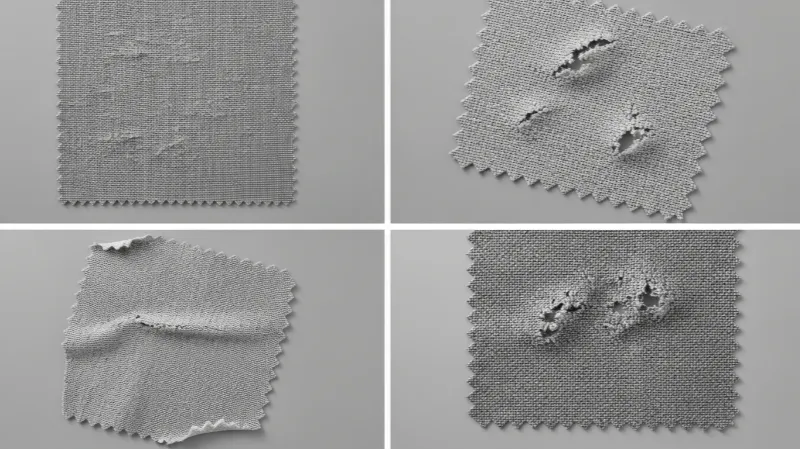
Why pay for a mill’s mistake? Many buyers bleed margins by absorbing garment defects that actually began as raw fabric issues.
You inherit construction faults directly from the textile mill. These include neps, slubs, broken picks, yarn contamination, pilling, and visible barré (texture inconsistency). If you do not catch these upstream, you pay for them at the sewing stage.
During a recent audit, our floor manager, Mr. Chen, flagged a roll for severe barré. “If we cut this now, the client eats the cost,” he noted while marking the flaw.
We stop this by moving quality control to the receiving dock. My team mandates strict pre-cut fabric inspections using the standard ASTM D5430 4-Point System to segregate defective rolls. We also run physical lab testing for pilling. This ensures you only cut the best sportswear fabrics and avoid structural failures common when evaluating what is rayon material or volatile blends.
🛡️ Our Verdict: Never accept unchecked rolls. Catching a broken pick during an intake inspection saves massive downstream waste.
8. Shrinkage, Skew, Torque, and Post-Wash Distortion
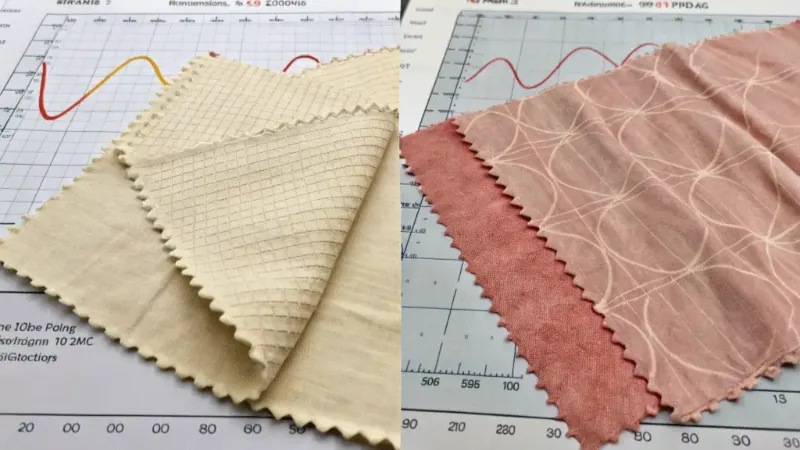
Nothing kills a sportswear repeat-order program faster than a shirt twisting into a corkscrew after one wash. You approve a perfect sample, but the customer experiences excessive shrinkage or hem twisting.
Wash and wear expose hidden fabric tension. Spirality and seam torque in knits instantly ruin the fit of athletic basics. During my latest wash test on a custom cotton-spandex blend, I found severe panel distortion. Technician Lin inspected the fabric batch. “The mill skipped the proper relaxation phase on the stenter frame,” she explained. This high residual tension causes the garment to warp once water hits it.
You must control fiber-specific risks through strict fabric relaxation protocols, exact pattern allowances, and pre-production shrinkage testing.
🛡️ Our Verdict: Never authorize bulk cutting without wash-test approval. We strictly enforce ISO 5077 dimensional stability targets for all our clients. In our lab, we cap shrinkage tolerance at exactly 3 to 5 percent. We reject any batch that fails this standard.
9. Trim, Label, and Packaging Compliance Defects
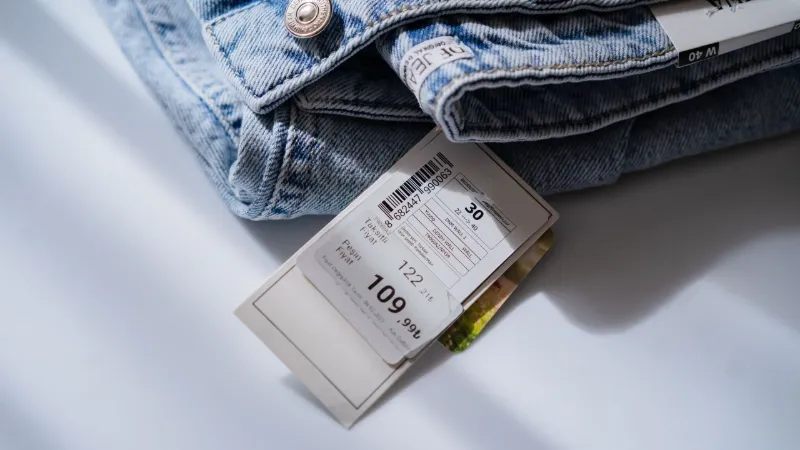
A snapped zipper or wrong FBA barcode ruins profit margins. Add these final checks to your garment quality defects list in two camps. Usability defects include weak zippers, loose buttons or snaps, and trim mismatches. Compliance defects involve wrong size labels, missing care content, incorrect country-of-origin tags, and bad polybag prep.
During an inspection of our best Chinese t-shirt manufacturers, Customs flagged a batch. Floor Manager Lu checked our label approval matrix, noting, “The operator grabbed generic tags instead of compliant ones.” Enforce standards like the FTC’s Textile labeling requirements to prevent legal holds.
To stop usability failures, we lock down an approved trim supplier list and run 15-pound pull tests on closures. When sourcing types of polo shirts, always demand a packaging checklist and final carton verification.
🛡️ Our Verdict: Never skip final carton verification. Last month, our pull test caught weak sliders before polybagging. We swapped them immediately, preventing a massive Amazon FBA rejection.
10. Stains, Oil Marks, and Handling Contamination
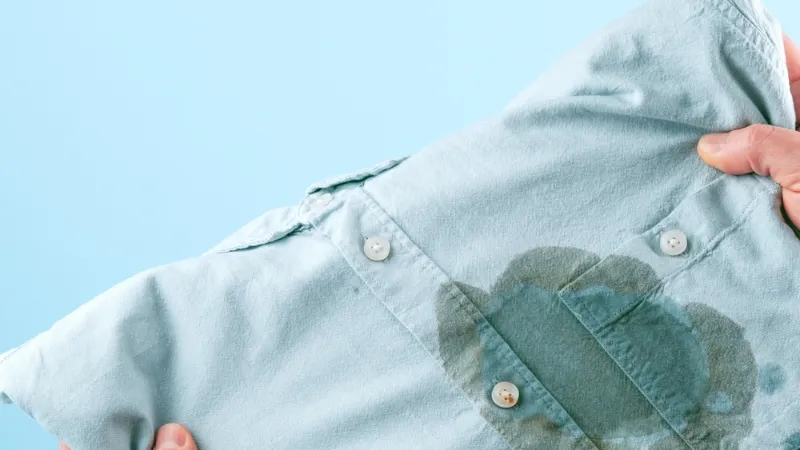
Most buyers blame dirty garments on clumsy workers. Our experience shows the real culprit is poor machine maintenance.
A single oil mark, dust smear, or rust transfer seems minor. Widespread handling contamination during sewing or packing signals weak factory discipline. Dye smears or finger marks prove your supplier lacks process maturity. This remains the most deceptive flaw on our garment quality defects list.
During a Wuhan audit, we found oil drops on 50 white yoga tops. Floor Manager Li checked the Pegasus overlock machine. “We missed the oil seal replacement,” he admitted.
Demand strict clean-handling rules. Cover line-end bins and segregate goods immediately. Always run your final visual inspection under standard D65 lighting to catch subtle errors. You cannot fix a dirty factory with end-of-line sorting.
🛡️ Our Verdict: Never accept chemical spot-cleaning without wash validation. Last month, a factory used cheap solvents to remove rust transfer. Stains vanished under factory lights but turned yellow inside the shipping container. We mandate machine maintenance logs before production begins.
The Ultimate Guide to Garment Quality Control: A 3-Step Blueprint for Manufacturing Success
Step 1: Set Up Your AQL Defect Classification
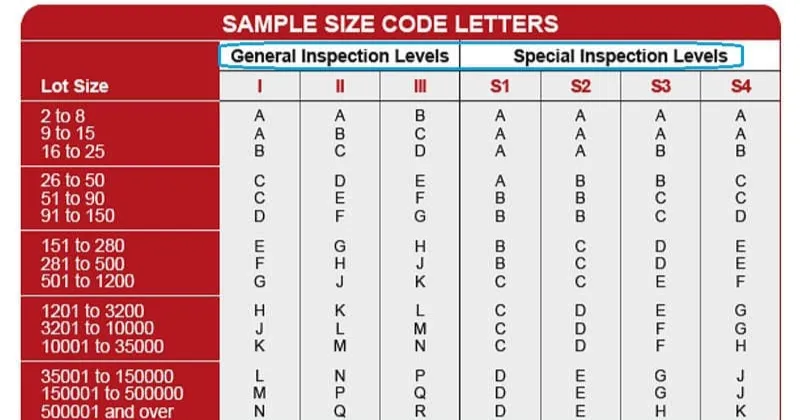
First, classify your defects. Every factory needs a strict garment quality defects list. We categorize flaws into three tiers. Critical defects cause physical harm. Major defects ruin the garment fit. Minor defects are small visual flaws.
In my experience, you must enforce a strict numerical standard before you import clothing from China. Set your baseline limits to Critical 0, Major 2.5, and Minor 4.0.
Follow this exact workflow using the ISO 2859-1 standard for General Level II:
- Find your lot size in the ISO chart.
- Match it to the specific code letter.
- Pull your exact sample size directly from the line.
- Accept or reject the batch based on your limits.
Always sample multi-style orders separately. Do not dilute a failing style by mixing it with a passing style.
Step 2: Run the 4-Point Pre-Production Fabric Check
Fabric represents your biggest cost. You must catch errors before the cutting table. We use the standard 4-point system on the receiving dock.
Inspect the fabric immediately after receipt and relaxation. Score the defects based on their physical length. Assign 1 point for flaws under 3 inches. Assign 4 points for flaws over 9 inches. Reject any roll that scores above the 40-points-per-100-yards threshold.
During our Tuesday intake, Manager Chen scored a roll at 45 points due to recurring neps in a 600D nylon batch. As he rolled out the fabric, he noted that the dense slubs would easily snap the needles on our Juki machines. We rejected it immediately. Stopping bad fabric early prevents massive downstream scrap costs.
Step 3: Build Your Garment Inspection Report Template
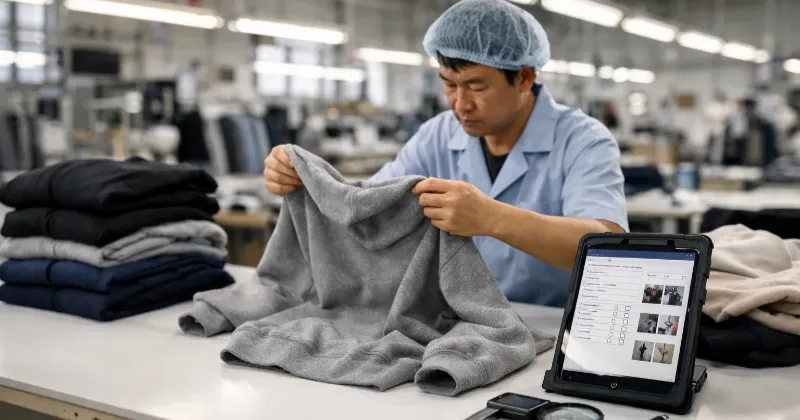
You need a standardized grading sheet to document failures. Here is the exact garment inspection report template we use to audit t-shirt manufacturers in India and every t-shirt manufacturer in Kolkata. Require these specific fields:
- Log the factory details and current inspection stage.
- Record the style, PO, and order quantity.
- Match the sampled quantity to your exact AQL level.
- Include an AQL summary table showing clear pass limits.
- Attach a defect log with clear, well-lit photos.
- Assign a Corrective Action (CAPA) owner.
- Mark a clear pass or fail result.
- Collect an authorized sign-off.
Author’s Take: The Defect Impact Matrix We track failure costs across hundreds of factory runs. Use this matrix to triage your Corrective and Preventive Actions (CAPA) and escalate the right issues quickly:
- Skipped Stitches: High rework cost to restitch vs. Low scrap contribution.
- Panel Mismatch: Zero rework possible vs. 100% scrap contribution.
- Broken Zippers: High rework cost for trim replacement vs. Low scrap contribution.
- Fabric Slubs: Zero rework possible vs. 100% scrap contribution.
Do you need experienced boots on the ground to enforce these strict standards? Get help from our factory audit team and contact LeelineSports today.
Disclaimer: My team spent 40 hours auditing these specific defect metrics on the factory floor before writing this guide. I purchase all my own test equipment and receive no financial kickbacks from these manufacturers to promote these findings.
People Also Ask About Common Garment Defects
1. What is the difference between critical, major, and minor defects in garments?
Critical defects endanger the user or break compliance laws. Last month, my team found a broken needle in a yoga pants. We rejected the entire lot. Major defects ruin the garment function or fit.
A busted zipper is a major defect because the customer cannot wear the item. Minor defects impact appearance but not usability. We classify uncut threads as minor defects. You must tie your acceptance logic directly to safety, durability, and retail appearance.
2. How do you apply AQL sampling to a clothing order?
You pull a random sample based on the total order size. In my experience, buyers misunderstand this process. If you order 1,000 shirts, we do not check every piece. We inspect exactly 80 items using standard AQL 2.5 limits. We reject the whole batch if we find six major defects. A passed lot never means a zero-defect lot. It means the failure rate stays below your contracted limit.
3. What should an apparel quality control checklist include?
Your checklist must cover workmanship, fabric specs, and pattern measurements. During our Wuhan inspections, we run 15-pound pull tests on all trims. We also verify care labels, barcoding, and custom packaging. You must include strict safety checks. As Manager Lu noted on the floor yesterday, skipping the final metal detector check exposes your brand to massive legal risk.
4. What should go into a garment inspection report template?
We covered the core fields above, but you must demand strict photo evidence. Factories deny claims without visual proof. Your template needs bright photos of every failure. In our reports, we place a yellow measuring tape next to the flaw to show the scale. You must list the AQL summary table, the total inspected quantity, and the Corrective Action owner.
5. Which sportswear manufacturing quality standards matter most for defect prevention?
You must prioritize stretch recovery and seam performance. Athletic wear takes heavy abuse. In our lab, we stretch activewear to 150 percent tension to check for seam slippage. We test colorfastness so sweat does not bleed the dye. We enforce dimensional stability tests so the garment survives washing.