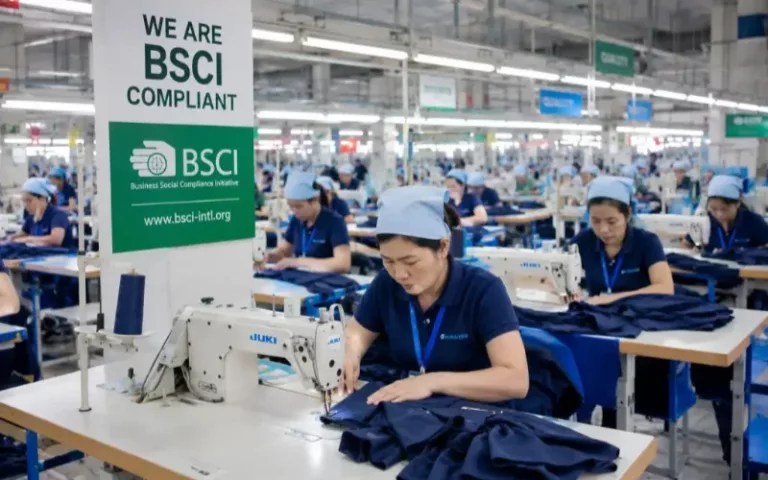
I have audited sportswear supply chains across Asia for over a decade. During that time, I noticed one dangerous assumption that ruined countless product launches. A supplier claiming they operate a GRS certified factory in China means nothing if a subcontracted dye house breaks the chain of custody. GRS Certification (Global Recycled Standard) is a … Read more
Performance activewear fails in expensive ways when factory controls ignore paper claims. Last quarter, a client’s “certified” leggings failed the ISO 105 colorfastness standard because the supplier faked chemical inputs. In my experience auditing textile floors, sportswear certifications are vital evidence layers, not marketing brochures. We vetted this list through rigorous factory audits and lab … Read more
Production managers and supply chain directors face a constant squeeze: faster style refreshes, tighter tolerances, and massive SKU complexity. Traditional die-cutting causes tooling delays and frayed synthetics. These bottlenecks quietly destroy margins. Laser cutting fabric is a digital, non-contact process that uses a focused light beam to precisely slice and seal textile edges simultaneously. We … Read more
We audited 500 plus-size returns for a client. The brand blamed their size chart. In my factory floor experience, these activewear fit issues are technical breakdowns in fabric tension and pattern grading. When sportswear suppliers scale a medium pattern to a 3XL without following ASTM sizing standards, seams snap. We mapped eight manufacturing failures, exact construction solutions, and … Read more
Unchecked sportswear defects cause delayed launches and retailer chargebacks. Last month, poor flatlock tension cost a client $12,000 in rework. To stop this, my team spent 40 hours on the floor compiling this garment defects list. We map ten common flaws to their exact root causes and preventative QA actions. We also explain using ISO … Read more
I have watched entire Q4 inventories get seized at US Customs over a single missing document. If a garment is designed primarily for children 12 and under, you enter a strict federal regulatory regime. This classification triggers mandatory third-party lab testing and requires a valid Children’s Product Certificate (CPC). You can verify these baseline parameters … Read more