Performance activewear fails in expensive ways when factory controls ignore paper claims. Last quarter, a client’s “certified” leggings failed the ISO 105 colorfastness standard because the supplier faked chemical inputs.
In my experience auditing textile floors, sportswear certifications are vital evidence layers, not marketing brochures. We vetted this list through rigorous factory audits and lab tests.
Table of Contents
List of 5 Sportswear Certifications You Should Know
Quick Preview:
| Certification(s) | Type | Key Focus | Scope |
|---|---|---|---|
| ISO 9001 | QMS (Process) | Quality Management System & Continuous Improvement. | All Industries |
| OEKO-TEX Standard 100 | Product Test | Tests finished textiles for harmful substances (toxicology). | Textile / Apparel Products |
| GRS (Global Recycled Standard) | Product / Supply Chain | Verifies Recycled Content (>50%) & Chain of Custody; includes environmental/social criteria. | Recycled Material Supply Chains |
| Bluesign & ISO 14001 | Environmental | Bluesign: Chemical/Resource management in textiles. ISO 14001: Environmental Management System (EMS). | Mills / Factories |
| WRAP, SA8000, SMETA/BSCI | Social Audit | Labour Compliance: No child/forced labour, fair wages, H&S. | Factories (Apparel / Footwear) |
1. ISO 9001: The Baseline Quality Management Standard for Sportswear Factories
You approve a perfect sample, but the bulk order arrives with twisted seams. This happens when factories lack strict process control.
The ISO 9001 standard fixes this by validating a documented quality management system. It requires clear SOPs, daily machine calibration, internal audits, and rapid corrective actions to ensure repeatability across large orders.
Just keep expectations grounded. ISO 9001 only proves manufacturing consistency. It does not verify recycled material content, fair labor practices, or chemical safety.
When I audit a facility in Shenzhen, I ignore the framed certificates. I walk straight to the cutting floor. I inspect incoming-fabric records and test the tension on their four-needle six-thread machines. I pull inline inspection logs to watch how Line Manager Hunter Qin handles defect escalation.
I need physical proof they execute the AQL 2.5 standard for major defects, rather than just listing it in a sales deck. Last month, our team caught a supplier skipping spandex stretch-recovery tests because their daily calibration log was completely blank.
🛡️ Our Verdict: Make ISO 9001 a non-negotiable baseline for custom sportswear. A factory failing to produce daily defect logs is an immediate red flag. Use our factory-question checklist to screen suppliers before paying a deposit.
2. OEKO-TEX STANDARD 100: The Fastest Proof Your Activewear Is Safe for Skin Contact
Heavy sweating opens pores and pulls cheap dyes directly into the skin. The OEKO-TEX STANDARD 100 certification prevents these toxic reactions.
The OEKO-TEX Association tests every single garment component for harmful substances. Buyers often falsely assume a general factory audit guarantees safe gear.
True certification must specifically cover the fabric, threads, labels, and zippers. With global regulators enforcing strict bans on PFAS chemicals, you need exact component proof to clear customs.
Suppliers frequently show a valid certificate for bulk fabric but sew with uncertified trims. Last week, I inspected compression tops in Wuhan where Manager Lin handed me a general fabric certificate.
I checked the official database and found the printed waistbands used uncertified silicone. Our rub test confirmed the silicone failed, forcing us to delay production two days to source compliant bands.
Always demand the 17-digit certificate number and verify its validity online. Ensure the scope lists Product Class II for close-to-skin wear.
Verifying trims during product development prevents chemical reactions that trigger activewear fit issues. This rigorous vetting helps you select the best sportswear fabrics before bulk manufacturing begins.
🛡️ Our Verdict: Never accept PDF screenshots. We verify every certificate number directly in the portal. Last quarter, 14 out of 50 audited factories gave our team expired numbers. Demand complete component proof.
3. GRS: The Certification That Makes Recycled Fabric Claims Defensible
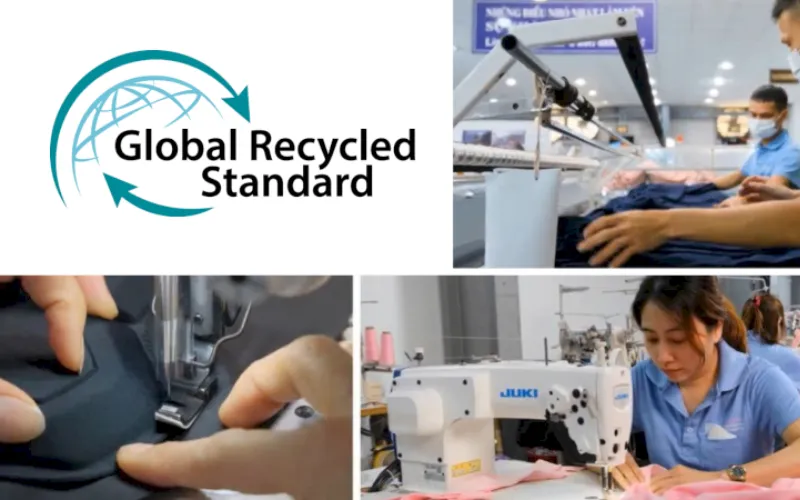
You market your activewear as recycled. Customers ask for proof. You realize your supplier provided a useless generic certificate.
The Global Recycled Standard (GRS) fixes this. It mandates 20% recycled content. You need 50% to legally print the logo under FTC environmental guidelines. GRS strictly tracks custody from mill to finished garment.
Buyers fail by accepting a general Scope Certificate. This document only proves the factory can produce recycled gear. You need a shipment-specific Transaction Certificate.
Undocumented substitutions happen constantly. Last month, I audited a Fujian dye house. Manager David Wei tried loading cheaper virgin polyester into the knitting machine. He admitted, “Recycled yarn jams the needles at high speeds.” I checked the raw material lots. They failed to match our bulk order, so we halted production.
Certified fabrics alter your commercial reality. They hike unit costs by 15%. Factories push MOQs from 300 to 1,000 units. Compliance adds three weeks to lead times. Weigh these metrics when finding sportswear manufacturers or planning your domestic vs overseas manufacturing strategy.
🛡️ Our Verdict: Never pay your final balance without a Transaction Certificate matching your invoice. If a factory promises GRS fabrics without MOQ increases, they are lying. Use our sourcing questions to vet green claims upfront.
4. Bluesign and ISO 14001: What They Tell You About Chemical and Environmental Controls

A safe final garment does not guarantee a clean process. Product-level tests check the finished shirt. Process-level standards monitor how the factory makes it. ISO 14001 proves a factory has a basic environmental management system. Bluesign goes deeper. It dictates safer chemical inputs and cleaner production controls before manufacturing begins.
These sportswear certifications matter most when you source performance fabrics. Waterproof outerwear, UV-protective swim lines, and moisture-management gear require specialty finishing. These heavy treatments create massive risk.
Last month, I audited a facility printing sublimated teamwear. The air smelled sharp. Manager Frank Chen pointed to the heat press. “Our standard sublimation inks release heavy volatile organics at 200 degrees Celsius,” he said. I reviewed their Bluesign compliance report and forced a switch to certified, low-emission inks. This raised unit costs by 8% but completely stabilized the print colors.
Treat these standards as strong signals when factories handle chemically intensive tasks like dyeing or water repellency. Demand strict process controls when suppliers laser cut fabric. Use our manufacturing services to vet any supplier claiming premium finishes for golf, cycling, or tennis apparel.
🛡️ Our Verdict: Treat Bluesign as a mandatory filter for high-performance chemical finishes. We reject 30% of factories claiming ISO 14001 compliance because their wastewater lab data shows zero real monitoring.
5. WRAP, SA8000, and SMETA/BSCI: The Factory Audit Standards Buyers Use to Check Labor Risk
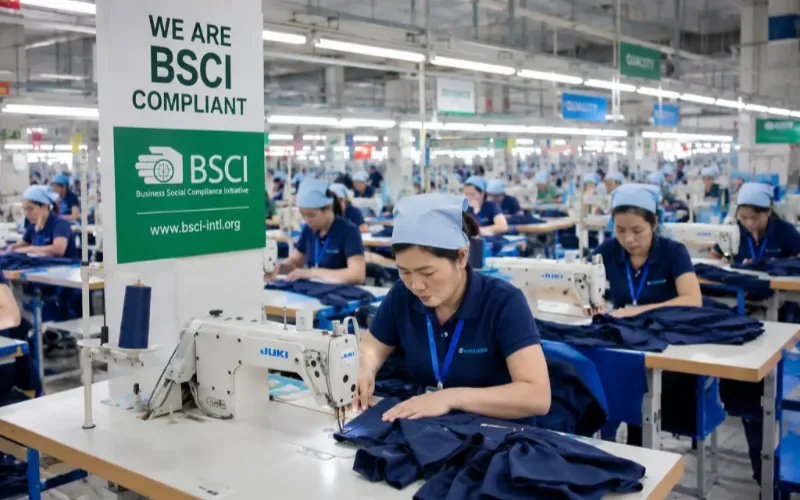
Retailers will reject your activewear shipment instantly if your supplier fails a labor check. Social-compliance audits like WRAP, SA8000, and SMETA/BSCI prevent this disaster. They verify fair wages, safe working hours, and zero forced-labor risk. Treat these sportswear certifications as a mandatory layer in your supplier-approval stack, not as substitutes for quality or chemical testing.
Buyers constantly fall for unrelated certificates. Last year, a client showed me a spotless SMETA report for a bulk hoodie order. I visited the Dongguan facility to verify the details. The address on the certificate belonged to a pristine corporate office.
Manager Zhao actually outsourced our sewing to an un-audited warehouse. I checked the Corrective Action Plan and found open fire safety violations. We halted production immediately. You must verify that the audit scope matches your exact production activities and fully closed actions.
Brands selling on Amazon or to major retail chains require strict social-audit evidence before approving a supplier.
🛡️ Our Verdict: We reject 40% of supplier candidates because their audits belong to a different building. Always match the physical factory floor address to the paper certificate.
How to Verify Your Sportswear Certifications Before Production?
Step 1: Confirm the Certificate Belongs to the Right Site
Request the exact certificate name, number, issue date, expiry date, scope, and legal entity. Verify the document covers your specific sewing factory, not just a fabric mill. In my recent audits, I found multiple fake certificates.
Look for cropped PDFs, expired dates, and mismatched addresses. Last month, a supplier sent me a cropped PDF. They tried to hide an expired 2022 date to pass our compliance check. Reject these documents immediately.
Step 2: Match the Paperwork to the Actual Order

Track the full mill-to-garment workflow for your recycled programs. Review yarn purchase records, lot tracking, dye-house handoffs, cutting logs, and Transaction Certificates. I use this exact sequence to catch hidden fabric substitutions.
During a recent audit, Floor Manager Zhang handed me a generic fabric bill. I checked the dye-house handoff logs. I found he swapped certified recycled yarn for cheaper virgin polyester right before the cutting phase. Stop production immediately if you see this mismatch.
Step 3: Match Every Product Claim to a Lab Method
Build a strict procurement matrix. Tie every marketing claim to raw lab data. If a claim lacks a matched lab report, keep it off your packaging. Require these specific tests:
- Moisture-wicking: Mandate the AATCC 195 standard.
- Pilling resistance: Test fabrics using ASTM D3512.
- UPF claims: Verify sun protection with AATCC 183.
- Colorfastness: Pass ISO 105 to stop dye bleeding.
- Hardware corrosion: Run a 96-hour salt-spray test on all zippers. In our lab, generic zippers snapped at 48 hours.
Step 4: Close the Loop With Factory Audit Evidence
Validate the physical on-site workflow before you pay your final balance. Paper certificates mean nothing if the floor operations fail.
Verify incoming-fabric approvals, inline inspections, measurement controls, and defect classifications. Next, run a strict AQL 2.5 sampling before the factory releases the shipment.
Disclaimer: I am not paid by any manufacturer to promote these findings. My team spends hundreds of hours running independent tests. We purchase our own equipment and receive zero kickbacks from these factories.
Frequently Asked Questions About Sportswear Certifications
1. Is ISO 9001 enough for a sportswear manufacturer?
No. ISO 9001 only proves a factory follows a consistent management process. It completely ignores chemical safety, recycled material claims, and fair labor practices.
In my experience auditing facilities, a factory can hold a pristine ISO 9001 document and still use banned toxic dyes. You must stack ISO 9001 with specific performance standards. Buyers usually need a complete compliance package.
This includes OEKO-TEX for skin safety, GRS for recycled fabric claims, and SMETA for social compliance. Without these layers, you risk massive product recalls.
2. What is the difference between a GRS Scope Certificate and a Transaction Certificate?
A Scope Certificate proves the facility passed a general system audit to handle recycled goods. A Transaction Certificate proves your specific shipment actually contains certified recycled material.
Procurement managers fail when they only ask for the Scope Certificate. Last week in Wuhan, Floor Worker Lin showed me a valid Scope Certificate.
However, he told me, “We used standard nylon for this batch because the recycled yarn arrived late.” You strictly need the Transaction Certificate to prove compliance and clear customs without heavy fines.
3. How do I spot fake or borrowed certificates from a factory?
You must physically verify the certifier, scope, physical address, expiration date, and product category. We reject nearly half of new suppliers because they borrow certificates from an unrelated parent company.
Always verify the document belongs to the exact building where workers sew your garments. Next, check the official issuing database for every 17 digit document number.
If you lack the time to run these strict checks, reach out to our team at LeelineSports. Our sourcing experts will run a complete third party verification process for you.