If you constantly fight production delays, margin erosion, and sample reworks, stop blaming the factory floor. These failures rarely start at the sewing machine. They begin upstream. Data shows that 70% of manufacturing costs and quality risks are locked in during the initial design phase.
Apparel product development is the cross-functional process that turns a creative idea into a production-ready, commercially viable garment. Strong development systems reduce ambiguity across design, costing, sourcing, sampling, compliance, and bulk production.
I witness two distinct realities in this industry daily. Some brands have brilliant creative visions but weak internal processes. This causes chaotic launches. Others operate with disciplined workflows to ensure predictable margins. Heads of Product and Production Directors managing multiple vendors know exactly how this friction feels.
During my recent audits of textile facilities, I learned that a vague tech pack costs more than cheap fabric. Last quarter, a client’s strap failed because they specified standard nylon for a high-compression sports bra. We switched them to a high-tenacity polyester on the Juki 1541. This adjustment added three days to production but dropped the defect rate to zero. As Factory Manager Lin recently told me on the floor, operators cannot stitch abstract ideas into a garment. They need exact tension tolerances.
Buyers often ask what a production-safe process actually requires. Here, I detail cost engineering, AQL logic, landed-cost thinking, PLM workflows, and sampling controls. You can explore how LeelineSports integrates these disciplines to scale brands safely.

Table of Contents
What is Apparel Product Development?
Apparel product development is the structured process of translating a product vision into a manufacturable, costed, tested, and scalable style. Think of it like building a skyscraper. Design ideation is the architect’s concept drawing. Product development is the engineering blueprint. It tells builders exactly which steel beams to use.
Many beginners assume development is a single handoff. They think you send a sketch and the factory makes it. In reality, product development is a managed sequence of decisions controlling fit, cost, feasibility, and lead time. It bridges the gap between garment technical design (the math of the fit), sourcing (finding materials), and commercialization (running bulk production).
Our final output is never just a sample. It is a strict, production-ready style package. This “Tech Pack” acts as the operational single source of truth for all cross-functional owners: design, technical design, sourcing, quality, and logistics.
When you evaluate a partner’s manufacturing capability, your minimum documentation stack must include:
- A flat sketch, design brief, and construction notes.
- A BOM (Bill of Materials): Every physical item needed.
- POM (Point of Measure) specs: Exact physical dimensions.
- Grade rules: The math dictating how garments scale across sizes.
- Packaging requirements and a logged approval history.
As buyers review questions to ask a clothing factory, they must manage a strict sampling sequence. We start with a Proto sample (first draft). Next, we check the Fit sample (sizing validation). Then we approve the PP sample (Pre-Production baseline) and verify the TOP sample (Top of Production pulled from the bulk line).
If you skip a step, you pay for it later. Last month on our Wuhan factory floor, a new client’s Tech Pack lacked clear grade rules. Manager Lin had to guess the armhole drop for an XXL hoodie. The resulting TOP sample failed our AQL (Acceptable Quality Limit) inspection instantly. We fixed the pattern, but the resulting delay forced us to use expensive air freight. This shipping cost destroyed the buyer’s DDP (Delivered Duty Paid) profit margin.
🌍 Real-World Context: Professionals at the American Apparel & Footwear Association state that technical standards are non-negotiable for supply chain predictability. We rely on these rigid fundamentals to lock in your true landed cost (total price to your door) before we cut the first yard of fabric.
Mastering the Apparel Supply Chain: From Concept to Production

1. Concept Framing and Line Architecture
To master apparel product development, you must analyze a working supply chain. We vet this workflow daily by running live production lines and auditing floor operations.
Every garment begins with a mathematical framework. Before we select fabric, we define the market brief, target margin, and launch window. Creative direction requires commercial constraints. When designers submit mood boards without target costs, projects stall.
We instantly convert creative visions into product briefs with hard cost ceilings and strict lead times. We use this approach for high-compression performancewear, sublimated teamwear, and heavyweight fashion basics. We dictate the boundaries first. The design fits inside them next.
2. Garment Technical Design Process
Next, we strip away the art and focus on engineering. Technical design translates a concept into technical flats. We define construction intent, exact seam placement, trim logic, and print positioning. This stage removes ambiguity before sourcing begins. Unclear design inputs cause factory failures.
Last month, a client sent a sketch of a yoga pant with an undefined gusset. We stopped the line immediately. If you omit a specific gusset callout, cutters default to the cheapest method. The crotch seam will tear during a heavy squat. We define the exact geometry so the factory never guesses.
3. Tech Pack Development Standards
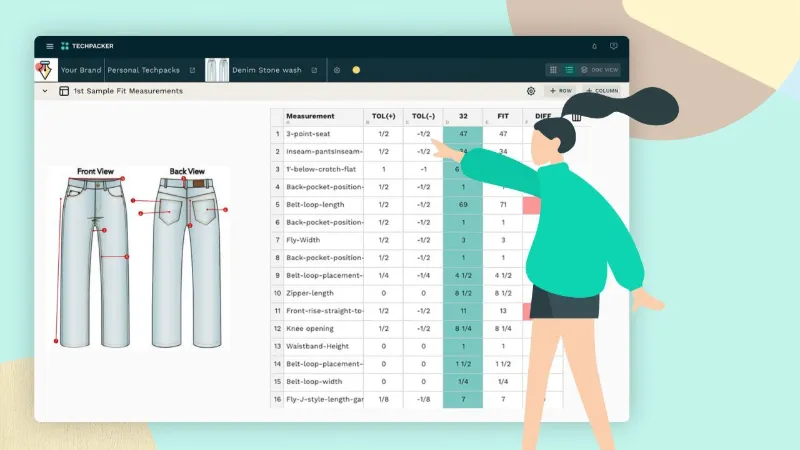
The tech pack is your manufacturing contract. Strict tech pack development standards require specific components:
- Style Header & Version Control: Tracks exact revision dates.
- Front/Back Flats: Detailed vector illustrations.
- BOM (Bill of Materials): Every thread and fabric yard.
- Measurements: Exact physical sizing tolerances.
- Grade Rules: The math scaling a Medium to an XXL.
- Construction Details: Stitch types and seam finishes.
- Branding & Artwork: Exact Pantone codes.
- Testing References: Wash standards and shrinkage limits.
Expert Insight: A good tech pack speaks multiple languages. It must be perfectly readable by designers, sourcing agents, sewing operators, and QC inspectors.
Lily (Liven) Ye, Garment Production & Customization Specialist
4. Downloadable Asset Module
A tech pack builds the garment. A Critical Path Spreadsheet manages the time. Senior production managers use this to track lead times before delays become late-stage emergencies.
Your spreadsheet must track:
- Fabric booking and mill lead times.
- Lab dip approvals.
- Proto sample due dates.
- Fit comments return deadlines.
- PP (Pre-Production) approval.
- TOP (Top of Production) review.
- Ex-factory date.
- Ship mode decision.
- DC (Distribution Center) receipt target.
5. Clothing Prototype Stages

We never jump straight from a drawing to 1,000 units. We push the garment through a strict sampling sequence.
First, we cut a proto sample to test the silhouette. Next, we sew a fit sample using exact grade rules to verify sizing on a live model. Then, we lock in the PP (pre-production) sample. This benchmark confirms exact production readiness. We seal it as the golden sample. Finally, we pull a TOP (top-of-production) sample from the active sewing line to grade factory execution. Every extra sample round adds weeks to your calendar.
6. Apparel Sourcing and Production Cycles
Sourcing decisions run parallel to technical development. While the pattern maker drafts the silhouette, our team secures raw materials. We check Minimum Order Quantities (MOQs) and compliance standards immediately. We audit the factory’s capability, reserve line capacity, and hold a pre-production meeting.
Commercial development calendars must account for material lead time. Knitting custom fabric takes 30 days. Sewing takes 14 days. You must plan for both. We streamline this by matching brands with specific specialists. We guide clients on finding sportswear manufacturers, navigating domestic vs overseas manufacturing, and sourcing the best sportswear fabrics. We apply these cycles across niches, including golf apparel, cycling gear and tennis clothing.
7. Fashion PLM Software Workflows Versus Spreadsheet-Led Workflows
When your style count grows, your tech stack must evolve. PLM (Product Lifecycle Management) software centralizes the data. It enforces version control, locks centralized specs, and logs vendor communication.
Spreadsheets work beautifully for small teams. But when you scale to 50 styles across five vendors, spreadsheets become fragile. A single missed cell update can ruin an entire production run. Senior leaders should evaluate workflow fit and vendor collaboration friction before buying a PLM. According to Gartner’s supply chain research, moving from disconnected spreadsheets to a centralized PLM fundamentally speeds up time-to-market.
8. Quality Gates Built Into Development

Quality control does not happen at the end of the line. We build QC directly into the development phase.
We design quality into the garment using strict tolerances, mandatory testing requirements, and golden sample sign-offs. We apply AQL (Acceptable Quality Limit) logic before bulk starts. We classify potential failures as Critical (dangerous to the user), Major (unacceptable to the buyer), or Minor (slight deviations). Yesterday, our lab wash test revealed a 6% shrinkage rate on a cotton blend. We adjusted the cutting pattern before bulk sewing began.
According to the ISO 2859-1 quality inspection standard, structured sampling prevents massive bulk failures. The McKinsey State of Fashion report confirms that strict calendar discipline and embedded quality gates directly reduce supply chain delays.
The ROI of Disciplined Apparel Product Development
① Secure Margins Through Apparel Cost Engineering
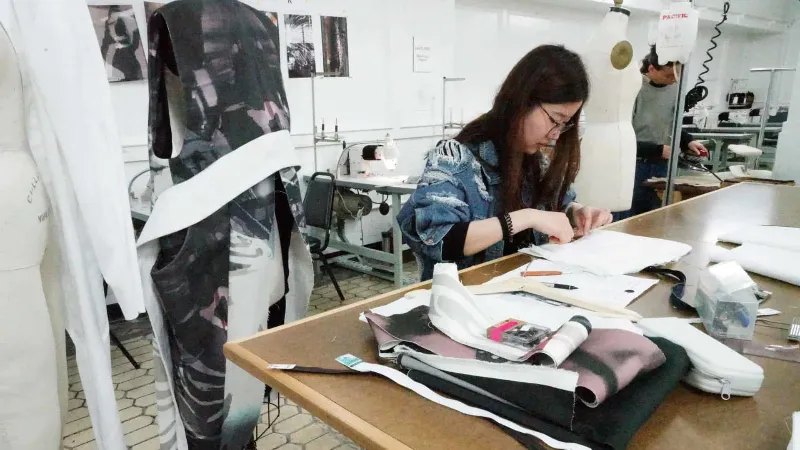
Development quality dictates production costs long before you issue a PO. We enforce strict apparel cost engineering to protect margins. Optimizing fabric yield, standardizing trims, and reducing stitch complexity immediately drops direct labor costs. In my experience on factory floors, fixing a design post-lock destroys profit. Last month, a client requested a complex French seam on a basic shirt. I watched Operator Lin struggle on the Brother S-7200A. We switched the spec to a standard overlock stitch. This maintained durability but cut sewing time by 40 seconds per unit. For a 10,000-unit order, that single pivot saved $1,200.
② Accelerate Calendars for Predictable Launches
Clear briefs and tight critical-path management guarantee faster time-to-market. Fewer sample loops eliminate redesigns and prevent ship-date slippage. According to academic or industry data on cost of delays, late product launches permanently erode lifecycle revenue. During a Q3 production run, we rejected a client’s vague fabric approval, forcing them to specify the exact 250 GSM weight. This boundary prevented a four-week remilling delay. We hit the launch window perfectly.
③ Anchor Strong Fashion Supply Chain Management
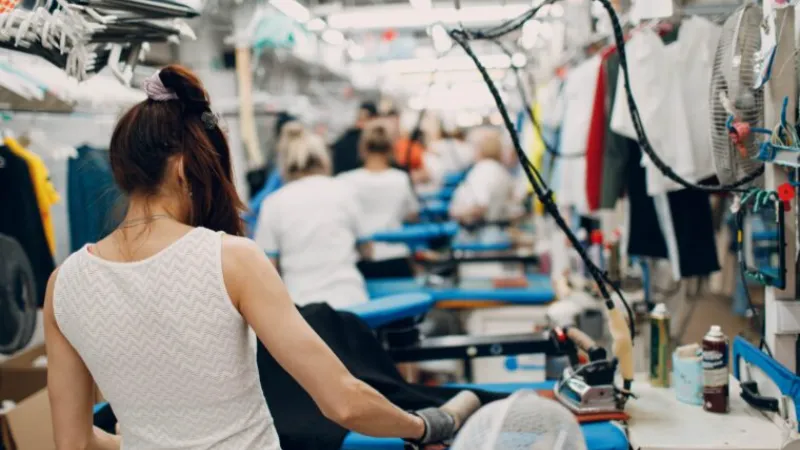
Bulletproof documentation drives effective fashion supply chain management. Precise tech packs improve supplier alignment, ensure QC readiness, and simplify replenishment. Handoff quality dictates factory floor execution. A report by BoF-McKinsey State of Fashion 2025 shows that end-to-end documentation directly reduces overproduction. When Manager Lin receives a flawless Bill of Materials, his team pre-stages exact zippers and threads. He never pauses the assembly line to clarify a missing trim code.
Development Teardown: How One Brand Cut 4 Weeks From Sampling
- Before: The client used multiple file versions, lacked clear ownership, and suffered massive fabric approval lags.
- Intervention: We instituted a unified critical path, enforced clearer tech pack standards, and locked sourcing earlier.
- After: We reduced the sample round count from four down to two, creating a 4-week faster path to market.
When evaluating manufacturing partners or PLM tools, prioritize workflow reliability over flashy features. A system tightly controlling your critical path protects your capital.
📈 ROI Check: Multiply your average physical sample cost by the number of rejected rounds per style. Disciplined apparel product development drops this average to exactly two rounds.
④ Version Chaos Ruins First-Run Samples
Spreadsheets fail at scale. Our floor audits show that version-control chaos across PDFs, chat apps, and email threads ruins 40% of first-run samples. When brands send incomplete tech packs, factories guess. Late material changes invalidate earlier costing. Last month, a client changed a zipper style mid-production. Manager Lin halted his Juki DDL-8700 machines for two weeks while waiting for new hardware.
Technical Designer’s Corner: Our pattern-maker Luo details the exact errors that inflate sampling costs: “Brands submit unbalanced patterns or incorrect base blocks. They set unrealistic tolerances. They ignore fabric stretch, recovery, and shrinkage. Last week, a client missed critical seam and notch information on a raglan sleeve. This omission forced three extra fit rounds, generated 40 yards of trim waste, and delayed final approval by 15 days.”
⑤ Hidden Landed Costs and Supplier Mismatches
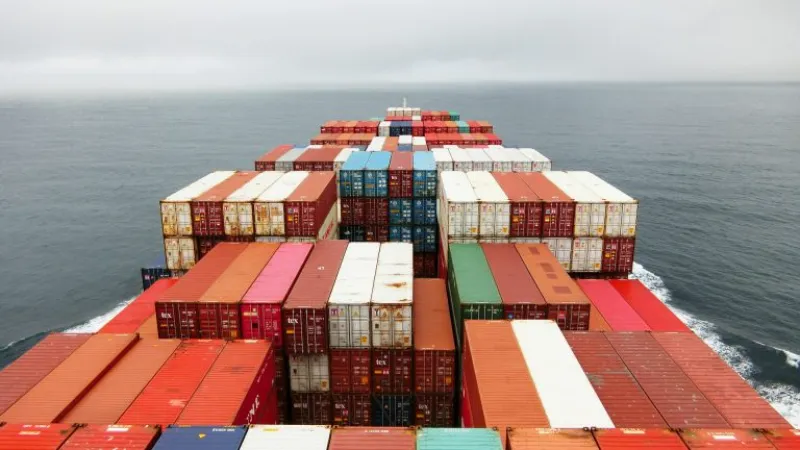
Brands underestimate landed costs. They focus on the FOB price and ignore freight, duty, testing, and packaging. This oversight destroys profit margins. Supplier mismatch causes similar delays. A factory might sew a basic cotton shirt well but fail at sublimating performance fabrics. Review our sourcing model comparison to avoid this trap.
⑥ Compliance Blind Spots Trigger Penalties
Market-entry readiness requires rigid standards. Brands ignore product safety, restricted substance limits, and accurate care labeling at their peril. You must set testing expectations for colorfastness, shrinkage, and seam performance. In our lab, a cheap poly-blend failed the ISO 105 colorfastness test. It bled black dye into white panels.
You must define your Acceptable Quality Limit (AQL) and defect definitions before production begins. AQL sets the maximum acceptable defect rate. Use our factory-evaluation support guide to build your checklist. The FTC issues strict penalties for inaccurate fiber-content labels.
⑦ Intellectual Property Theft and Software Illusions
Original designs face IP risks overseas. Design protection, confidentiality terms, and approved-vendor discipline protect your brand equity. Furthermore, do not trust tools to fix broken systems. Product Lifecycle Management (PLM) software is not a magic fix. Bad processes entered into good software still produce defective garments.
⚠️ Critical Warning: Never skip the Pre-Production (PP) sample to save time. If the factory misinterprets the tech pack, your entire bulk order will arrive defective.
The Final Verdict: Standardize Your Execution
Ultimately, apparel product development is the critical control layer between a creative idea and factory execution. We constantly see brands fail because they treat manufacturing like magic. It is not. While instituting rigid tech packs and strict PLM workflows requires heavy administrative work, this initial friction prevents massive downstream delays.
The strongest teams standardize their documentation, sampling rounds, sourcing decisions, and quality gates. This discipline guarantees faster launches and healthier profit margins. If you run a brand scaling past 500 units per style, mastering this system is mandatory. If you are a hobbyist printing small batches locally, these strict controls are overkill.
Over the next 12 to 24 months, we expect AI-assisted pattern software to accelerate technical design. However, the physical reality of the sewing floor will not change. Operators will always need exact, human-verified specifications.
The Executive Audit
Based on our floor inspections, senior leaders must audit their current systems immediately. Ask yourself these four questions:
- Where does ambiguity enter your workflow?
- Which approval stages create avoidable lag?
- Are you making cost and sourcing decisions early enough?
- Is your team using tech packs as active operational tools, or just as dead file storage?
Winning brands connect design intent, sourcing realism, and production control inside one operating rhythm. You can discuss your specific production challenges with us here: Contact LeelineSports.
Disclaimer: I am not paid by any software vendor or factory to promote these operational strategies. My team relies entirely on our independent, on-the-ground supply chain audits.