Looking for a fabric that combines incredible durability with the perfect stretch for your custom sportswear? PBT fabric is changing the performance apparel game in 2025. It offers great elasticity and resists chemicals, chlorine, and UV rays.
As a sportswear manufacturer, we offer custom jackets and activewear made from high-performance polyester. This material keeps its shape, even after long use. Choosing PBT for your team’s uniforms means you get gear that looks great and feels comfortable during tough activities.
In this piece, we’ll take a closer look at PBT fabric’s complete story. You’ll find everything about its chemical makeup, how it’s made, its key features, and where it’s used.
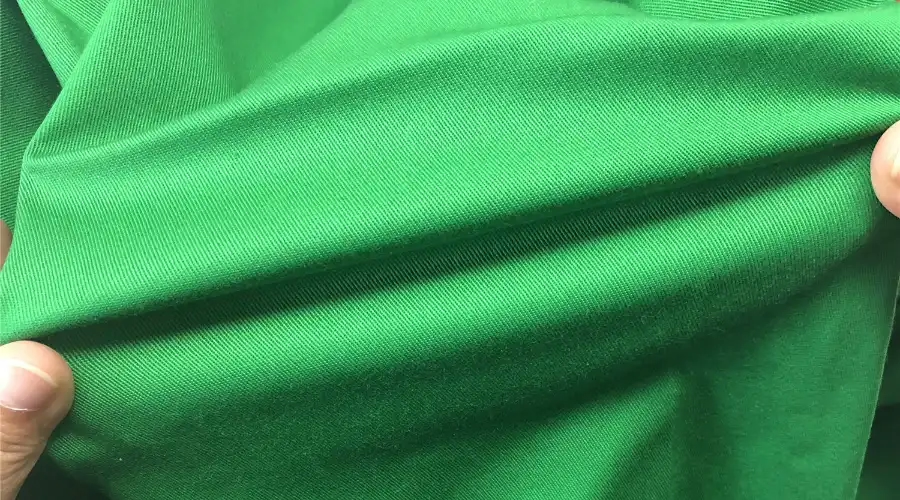
Table of Contents
What is PBT Fabric?
PBT is a special type of synthetic polyester. Its unique structure makes it great for use in textiles. Many industries are very interested in this special material. Its unique properties and performance skills attract attention.
Definition and chemical composition
PBT fabric is a type of thermoplastic polyester. It forms when terephthalic acid and 1,4-butanediol (butylene glycol) are combined. The polymer’s chemical formula is (C12H12O4)n. Its molecular structure has four methylene groups that give PBT a high degree of crystallinity.
PBT’s crystalline structure exists in two forms: α-form and β-form. Hot stretch treatment transforms the crystal structure into β-form, which reverts to α-form through relaxation. This reversible crystalline transformation helps create the fabric’s unique mechanical properties and flexibility.
How it differs from traditional polyester
Quick Preview:
| Category | PBT Fiber | PET Fiber (Polyester) |
|---|---|---|
| Comfort | Softer, skin-friendly (closer to natural fibers). | Stiffer, slight “plastic” feel. |
| Elasticity & Recovery | Better stretch & recovery (ideal for activewear). | Moderate stretch; may sag after use. |
| Pilling Resistance | Excellent (less fuzz from soft surface). | Poorer (prone to pilling). |
| Heat Resistance | Lower (melts ~223°C; gentle washing). | Higher (melts ~255°C; withstands high heat). |
| Dyeing Performance | Easy (low-temp dyeing, high color fastness). | Requires high-temp/pressure dyeing. |
| Processing Efficiency | Fast (shorter production cycles). | Slow (needs extended heating/setting). |
| Best For | Comfortable garments (underwear, loungewear, activewear). | Structured/durable items (outerwear, jeans, suits). |
Suggested Reading:
- What Is The Best Material For Running Pants?
- Cotton Vs Polyester Golf Shirts, Which Is Best?
- 12 Best Chinese T-Shirt Manufacturers for Quality Production (2025)
What is PBT Fabric? Key Properties
PBT fabric stands out with its exceptional performance qualities. This specialized polyester has become a popular choice in performance textiles because it meets the needs of many industries. Let’s explore why these properties make it so special.
Elasticity and stretch recovery
PBT fabric shows remarkable elasticity and can stretch 30-50% as it adapts to body movements. The material bounces back impressively with a recovery rate that’s over 90%, which means your clothes return to their original shape after stretching. Heat treatment will boost PBT’s stretch capabilities by a lot – somewhere between 33-57%. This elastic quality stays consistent whatever the temperature, so you get reliable performance in any environment.
Durability and abrasion resistance
PBT fabric’s superior strength, toughness, and stiffness help it handle tough use without breaking down. Products made from this material usually last 2-3 times longer than regular polyester options. PBT resists tearing, stretching, and abrasion. This means garments stay looking good, even after many washes and wears.
Chemical and chlorine resistance

PBT fabric stays stable when it comes in contact with chemicals like acids, alkaline solutions, oils, greases, and solvents. Its chlorine resistance is important. It makes it about 5 times tougher than nylon or spandex in chlorinated pools. This explains why athletes and swimmers prefer PBT for their high-performance swimwear.
Moisture-wicking and quick drying
PBT fabric absorbs minimal water (only about 0.4%) and quickly moves moisture away from your skin. Moisture spreads 30-40% wider compared to other fabrics, which makes it more comfortable during workouts. It also dries about four times faster than nylon, so bacteria have less chance to grow between uses.
UV resistance and color retention
PBT fabric naturally protects against ultraviolet radiation and prevents structural breakdown in sunlight. Recent studies show that PBT has better UV properties than PET-based fabrics. This UV damage resistance, combined with excellent color fastness, keeps your clothes looking bright even after lots of use and many washes.
What is PBT Fabric And How PBT Fabric is Made

PBT fabric manufacturing starts with raw chemicals that change into versatile textiles. These textiles offer exceptional elasticity and performance characteristics.
▶ Polymerization process overview
PBT creation begins when terephthalic acid (PTA) or dimethyl terephthalate (DMT) reacts with 1,4-butanediol (BDO). The polycondensation process needs low temperatures and specialized catalysts in well-heated equipment. Manufacturers first used batch methods to produce PBT. They later developed continuous production techniques to streamline processes. The resulting polymer shows high crystallinity and becomes the foundation for future processing.
▶ Spinning and texturing of fibers
The polymerized PBT material goes through several changes. The polymer melts at high temperatures and moves through spinnerets to create continuous threads. These filaments cool faster to solidify before texturing begins. Texturing adds bulk and makes the fabric look and feel better. The PBT fibers now exist in their extended β crystalline form.
▶ Weaving or knitting into fabric
Manufacturers can process PBT yarns through standard textile machinery after spinning and texturing. They weave or knit these fibers into fabric structures based on the final product needs. The fabric’s construction affects its final properties by a lot, especially its elasticity and recovery.
▶ Finishing treatments and dyeing
Finishing is a vital step where PBT fabric develops its signature elasticity. The crystal structure changes from β-form to α-form through thermal treatment – usually in boiling water for about 30 minutes. This change activates PBT’s elastic properties. The fabrics then undergo dyeing with disperse dyes at temperatures near 98°C without carriers. PBT’s advantage is that it takes dye at lower temperatures than regular polyester.
What is PBT Fabric? Common Uses
PBT fabric finds its way into many industries because it has unique properties that work great for challenging uses.
① Sportswear and swimwear

PBT fabric is great for performance clothing. It works well in leggings, gym wear, and sports bras. Athletes love it for its comfort and flexibility. Swimmers love PBT because it stands up to chlorine, lasting over 200 hours in pool water without breaking down. The fabric keeps its color and structure by fighting off both chlorine and UV rays. PBT lets you move freely and dries quickly after your workout.
Expert Insight: For garments prioritizing softness (e.g., underwear, loungewear) or stretch (e.g., activewear), PBT is ideal—but avoid high-heat washing/drying to prevent softening. When durability or structure (e.g., outerwear) is key, pair PBT with PET blends to balance comfort and heat resistance.
Katina Lin, OEM Apparel Manufacturer
Recommended Reading: Water Resistant Fabric: What Outdoor Experts Don’t Tell You
② Home textiles and upholstery
PBT fabric goes beyond sports into our homes through upholstery, curtains, and decorative fabrics. Your sofa covers and cushions will look great for years thanks to PBT’s toughness, moisture resistance, and UV protection. People choose PBT for their homes because it stays soft and flexible even with daily wear and tear.
③ Automotive interiors
Car manufacturers put PBT fabric in seat covers, door panels, and headliners. The material keeps its shape in cars because it’s strong, rigid, and resists wear. PBT handles heat and chemicals well, which makes it perfect for tough vehicle environments.
④ Medical and industrial applications

Hospitals use PBT in wound dressings, surgical gowns, and bandages. The fabric helps filter blood and works as technical cartilage tissue. Industries rely on PBT for conveyor belts, filters, and other tough jobs where they need something that fights off chemicals and lasts long.
Conclusion
PBT fabric keeps finding new uses in a variety of industries, from chlorine-resistant swimwear to durable automotive interiors. Its moisture-wicking abilities, quick-drying nature, and exceptional durability make it valuable especially when you have performance clothing needs. Its resistance properties have created opportunities for specialized uses in medical textiles and industrial applications.
If you want to customize swimwear, towels, or other apparel and learn more about fabric options, feel free to contact us at Leelinesports.com anytime!
Related Resources:
- Top 12 Italian Cycling Apparel Manufacturers
- Best Hunting Clothing Brands Of 2025
- Top 10 Golf Polo Shirts Manufacturer & Supplier In USA
FAQs
Q1. What is PBT fabric and how does it differ from regular polyester?
PBT fabric is a specialized polyester made from polybutylene terephthalate. It offers superior elasticity, faster drying, and better chemical resistance compared to traditional polyester. PBT can stretch 30-50% while maintaining over 90% recovery, making it ideal for form-fitting and performance applications.
Q2. What are the main advantages of using PBT fabric?
PBT fabric offers excellent elasticity, durability, and resistance to chemicals, chlorine, and UV radiation. It wicks moisture efficiently, dries quickly, and retains its shape and color even after repeated use and washing. These properties make it ideal for sportswear, swimwear, and other demanding applications.
Q3. Is PBT fabric safe to wear?
Yes, PBT fabric is generally safe for clothing. It’s widely used in sportswear and swimwear due to its performance properties. However, like all synthetic materials, it’s important to follow care instructions and be aware of individual sensitivities.
Q4. How does PBT fabric perform in swimwear compared to other materials?
PBT fabric excels in swimwear applications. It offers about 5 times more chlorine resistance than nylon or spandex, maintaining its integrity for over 200 hours in chlorinated water. It also provides UV protection and dries quickly, making it a top choice for high-performance swimwear.